Educational framework
Why we do it this way.
A look at the educational philosophy, psychology, and research that shapes every session at Grow Space.
What to expect
A typical session.
No two agendas are the same, but the shape of a session is. Four steps, every time, so children always know where they are.
Check-In
The agenda is written on the whiteboard at the beginning of each session so the child knows what is on the schedule for the day. A visual schedule helps children practice planning, organization, flexibility, emotional regulation, and independence. As children become more familiar with routines, they begin to internalize these skills and use them beyond Grow Space.
Create & Reflect
Children express their thoughts through drawing, journaling, or conversation as they reflect on the skill we practiced previously. Reflection helps children connect new learning to past experiences and build self-awareness.
Learn a New Skill
Through books, games, discussions, and hands-on activities, children are introduced to a new executive functioning skill in an engaging, developmentally appropriate way.
Celebrate Growth
Each session ends by celebrating effort, recognizing progress, choosing a prize from the Treasure Chest, and previewing what we’ll continue building together next time.
The skills we build
What we are actually practicing.
Whether we’re practicing flexible thinking during a board game, emotional regulation through a story, or planning during a creative project, every experience is intentionally connected to the skills children need to thrive.
Getting started
Remembering things
Flexible thinking
Managing big feelings
Self-monitoring
Time awareness
Thinking ahead
Keeping things in order
How we teach them
Evidence-informed, and chosen on purpose.
Our sessions are intentionally designed to strengthen these executive functioning skills through evidence-informed strategies, purposeful practice, and developmentally appropriate activities.
Visual schedules
support planning and working memory by showing children what comes next, freeing their attention for learning. Diamond, 2013
Play
creates opportunities to practice complex skills. Games and playful activities naturally ask children to remember rules, wait, shift strategies, manage frustration, and adapt when things don’t go as planned. Diamond & Lee, 2011
Reflection
helps learning stick. Opportunities to pause, journal, draw, or talk about what they’ve learned help children organize their thinking, make meaningful connections, and strengthen memory over time. Dunlosky et al., 2013
The environment
can provide executive functioning support. Predictable routines, visual cues, organized materials, and thoughtfully structured spaces can reduce unnecessary demands and help children engage more independently.
Practice
builds executive functioning skills. Children need repeated opportunities to use skills like inhibition, flexible thinking, working memory, and self-regulation in meaningful contexts. Diamond & Lee, 2011
Encouraging effort
supports persistence. By noticing strategies, effort, and progress we help children develop confidence and become more willing to persist through challenges. Dweck, 2006
Understanding the whole child
A strengths-based approach.
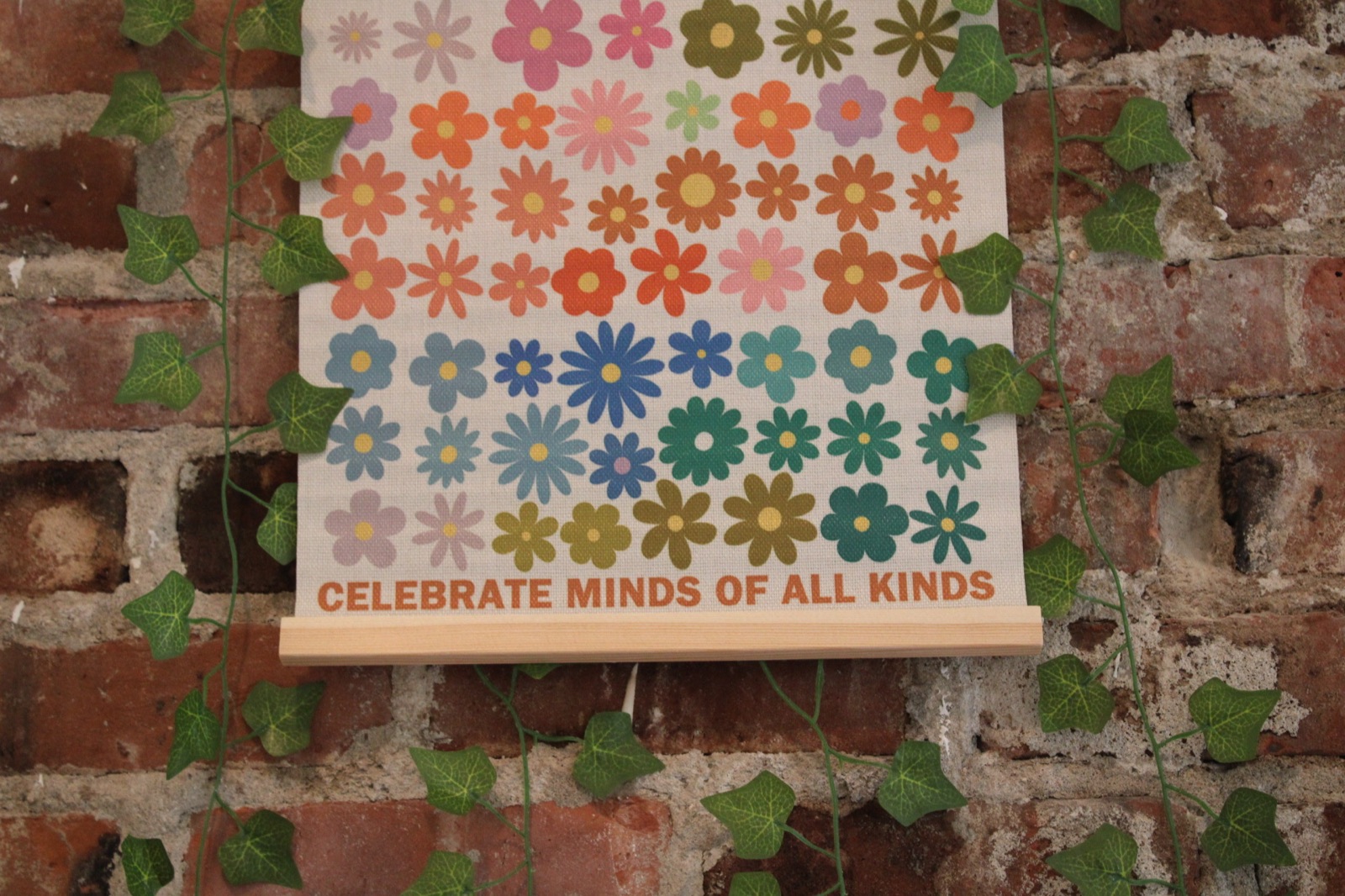
Each child has unique strengths, challenges, interests, experiences, and ways of making sense of the world.
By meeting children where they are and celebrating neurodiversity, we create the foundation for meaningful learning and lasting confidence. Every child is a particular person, learning in a particular way, and the work is to find out how.
Why self-understanding matters
Children become active participants in their own growth.
It is so empowering for children to learn why certain strategies work, what their emotions are communicating, and how their brains respond to different situations. The goal is to help our students understand themselves well enough to use their coping skills and strategies independently.
The research behind Grow Space
Where all of this comes from.
Children develop stronger executive functioning skills when adults provide consistent routines, visual supports, and opportunities to practice those skills in meaningful, engaging contexts.
- Center on the Developing Child at Harvard University. (2011). Building the Brain’s “Air Traffic Control” System: How Early Experiences Shape the Development of Executive Function.
- Diamond, A. (2013). Executive Functions. Annual Review of Psychology.
- Diamond, A., & Lee, K. (2011). Interventions shown to aid executive function development in children 4–12 years old. Science.
- Dweck, C. (2006). Mindset: The New Psychology of Success.
- Edwards, C., Gandini, L., & Forman, G. (Eds.). (2012). The Hundred Languages of Children: The Reggio Emilia Experience in Transformation (3rd ed.). Praeger.
- Flavell, J. H. (1979). Metacognition and cognitive monitoring. American Psychologist, 34(10), 906–911.
- Hirsh-Pasek, K., Zosh, J. M., Golinkoff, R. M., Gray, J. H., Robb, M. B., & Kaufman, J. (2015). Putting education in “educational” apps. Psychological Science in the Public Interest, 16(1), 3–34.
- National Association for the Education of Young Children. (2020). Developmentally Appropriate Practice Position Statement.
- Armstrong, T. (2012). The Power of Neurodiversity. Da Capo Press.
- Center on the Developing Child at Harvard University. (2014). Enhancing and practicing executive function skills with children from infancy to adolescence.
- Kuypers, L. M. (2011). The Zones of Regulation: A curriculum designed to foster self-regulation and emotional control. Think Social Publishing.
- Vygotsky, L. S. (1978). Mind in Society: The Development of Higher Psychological Processes.
Curious whether this fits your child?
Start with a complimentary consultation. No assessment, no obligation, just a conversation about what is feeling hard right now.